


Most renovation checklists don’t really help.
They list tasks—but they don’t explain why those tasks matter or when they should be done.

The result? Homeowners tick boxes and still feel unsure.
This renovation planning checklist is different.
It focuses on the decisions that actually shape outcomes, not just activities that feel productive.
Why Most Renovation Checklists Fall Short
Typical checklists include things like:
- Get quotes
- Choose finishes
- Finalise budget
- Start construction
None of those are wrong—they’re just incomplete.
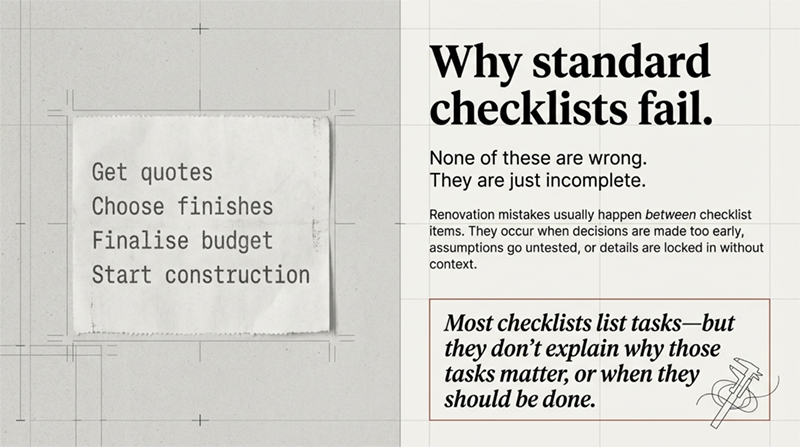
Renovation mistakes usually happen between checklist items, when:
- Decisions are made too early
- Assumptions go untested
- Details are locked in without context
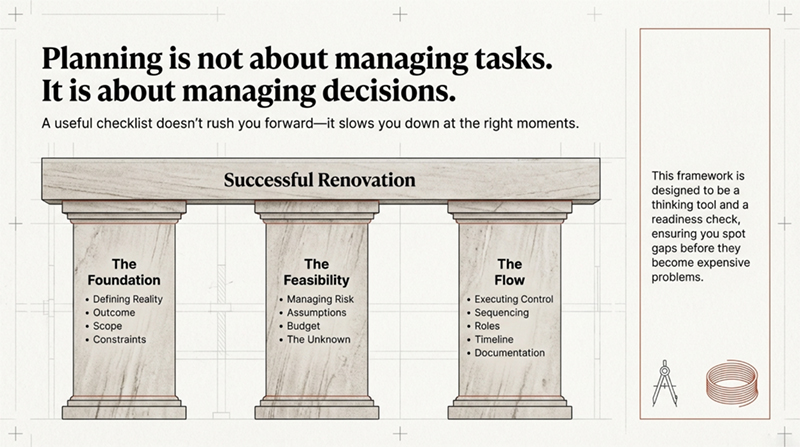
A useful checklist doesn’t rush you forward—it slows you down at the right moments.
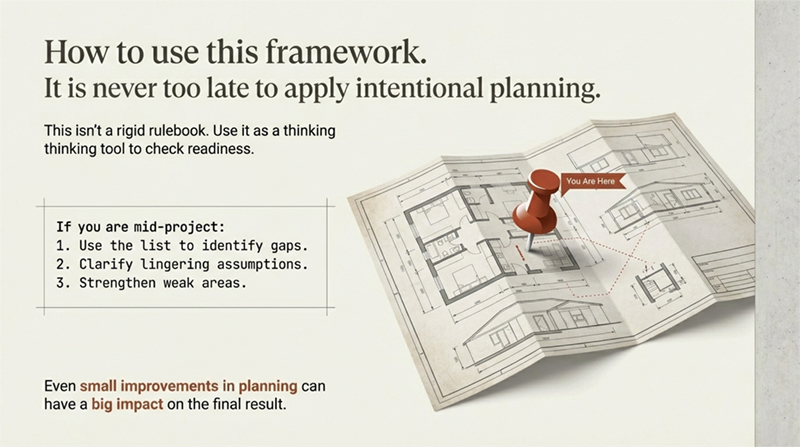
How to Use This Renovation Planning Checklist
This isn’t meant to be followed all at once.
Use it as:
- A thinking tool
- A way to check readiness
- A way to spot gaps before they become problems
Especially if this is your first time renovating, it helps replace guesswork with clarity.
The Checklist (What Actually Matters)
1. Clarify the Outcome (Before Any Design Work)
Before drawings, quotes, or inspiration boards, be clear on:
- What problem the renovation must solve
- How you want the space to function day-to-day
- What “success” would feel like after completion

If this isn’t clear, everything that follows becomes harder.
2. Identify What Cannot Change Later
Some decisions are easy to revise. Others are not.
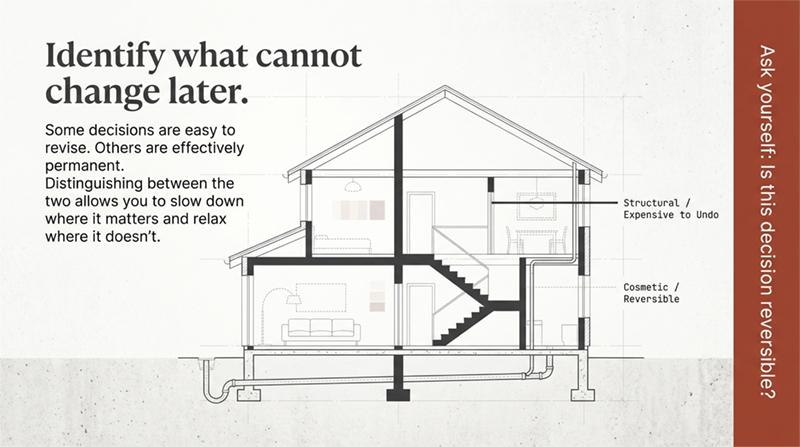
Before committing, ask:
- Which walls, services, or layouts are hard to change?
- Which decisions would be expensive to undo?
This helps you slow down where it matters—and relax where it doesn’t.
3. Make Assumptions Visible
Every renovation plan contains assumptions.
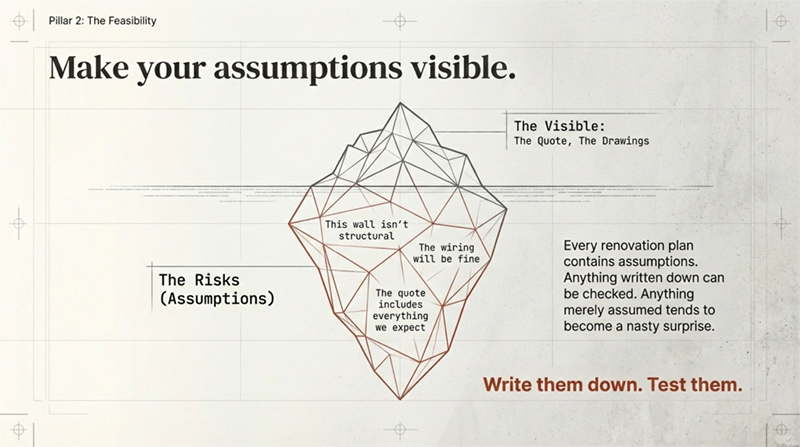
Common ones include
- “This wall isn’t structural.”
- “The wiring will be fine.”
- “The quote includes everything we expect.”
Write assumptions down.
Anything written can be checked.
Anything assumed tends to become a surprise.
4. Define the Scope Clearly (In Plain Language)
Scope isn’t just what’s included—it’s what’s not included.
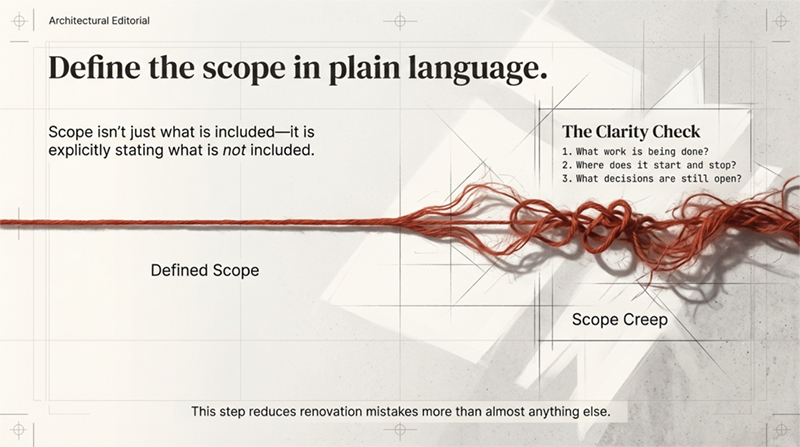
A clear scope answers:
- What work is being done
- Where it starts and stops
- What decisions are still open
This reduces renovation mistakes more than almost anything else.
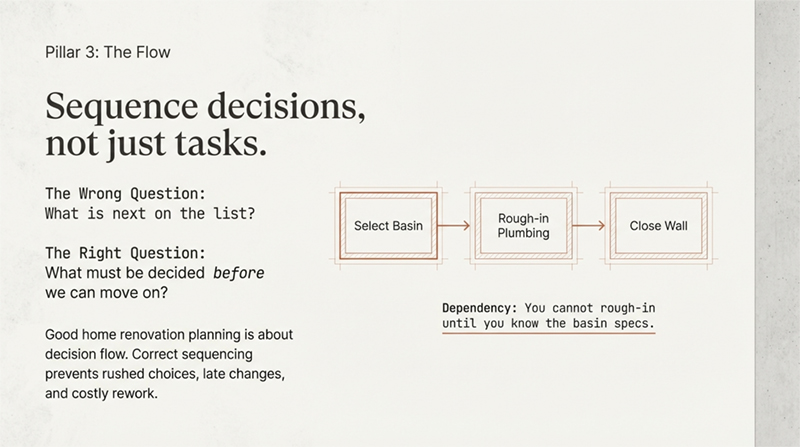
5. Sequence Decisions, Not Just Tasks
Instead of asking, “What’s next?”, ask, “What must be decided before we can move on?”
This helps prevent:
- Rushed choices
- Late changes
- Rework
Good home renovation planning is about decision flow, not task lists.
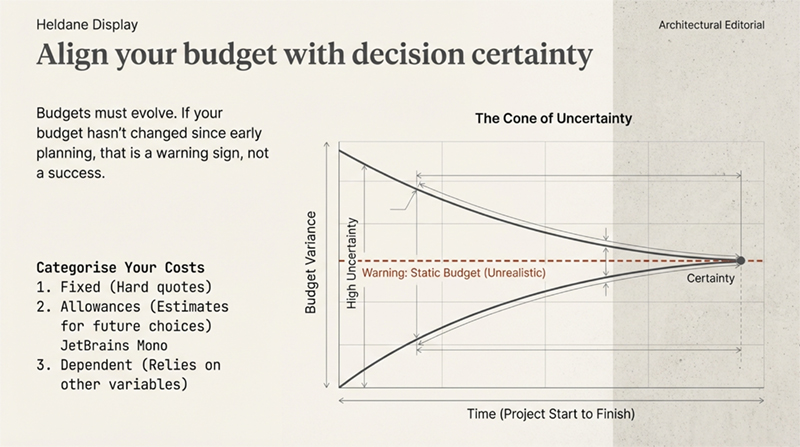
6. Align Budget With Decision Certainty
Budgets should evolve as decisions become clearer.
Check:
- Which costs are fixed
- Which are allowances
- Which depend on future choices
If your budget hasn’t changed since early planning, that’s often a warning sign—not a success.
7. Allow for the Unknown (Deliberately)
Every renovation involves uncertainty—especially in existing homes.

Ask:
- What could reasonably be uncovered later?
- How much flexibility do we have?
This is where contingency belongs—not as a buffer for poor planning, but as protection against reality.
8. Confirm Roles and Responsibilities
Misunderstandings often come from unclear expectations.
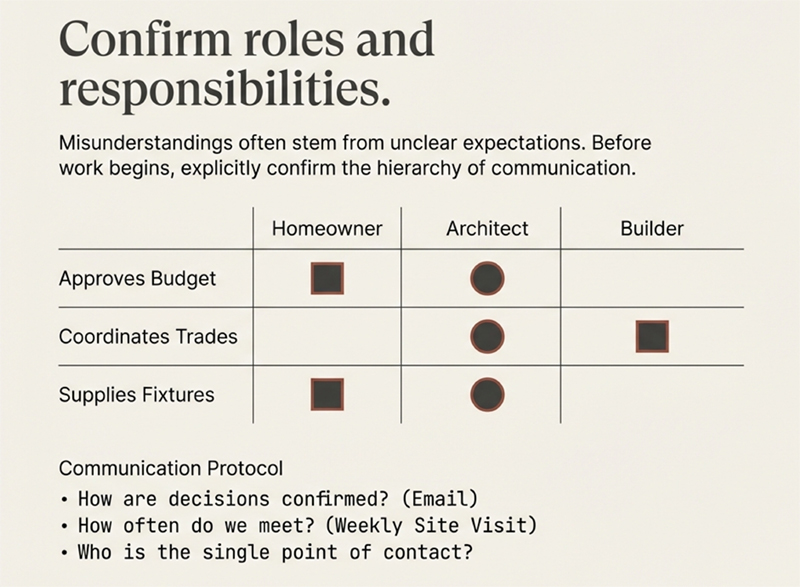
Before work begins, be clear on:
- Who is responsible for decisions
- Who coordinates trades
- Who confirms changes
- How communication happens
Clarity here prevents stress later.
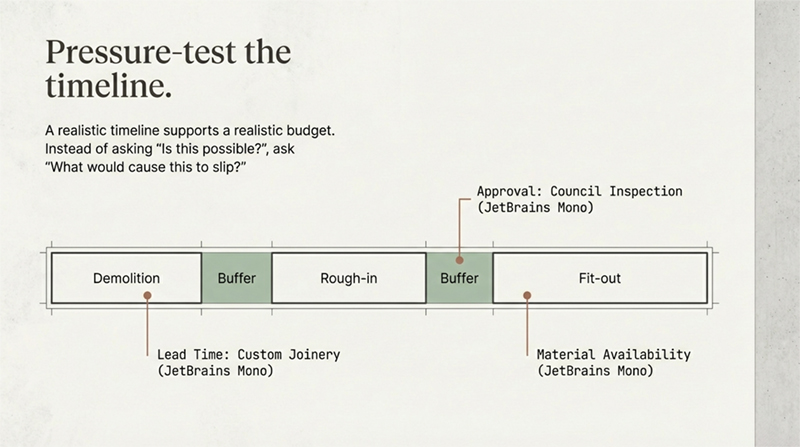
9. Pressure-Test the Timeline
Instead of asking, “Is this possible?”, ask, “What would cause this to slip?”
Consider:
- Decision lead times
- Material availability
- Inspections or approvals
A realistic timeline supports a realistic budget.
10. Document Key Decisions as You Go
Memory fades. Projects evolve.
Keep track of:
- What was decided
- Why it was decided
- When it was locked in
This becomes invaluable during construction—and long after the renovation is finished.
Why This Checklist Works Better Than Most
This checklist:
- Focuses on thinking, not ticking
- Reduces renovation mistakes before they happen
- Supports confident decision-making
- Adapts to different project sizes
It’s especially useful for first-time home renovation projects, where knowing what matters is more important than knowing everything.
If You’re Already Partway Through Planning
You don’t need to start over.

Use this checklist to:
- Identify gaps
- Clarify assumptions
- Strengthen weak areas
Even small improvements in planning can have a big impact later.
Renovation Planning Isn’t About Control—It’s About Clarity
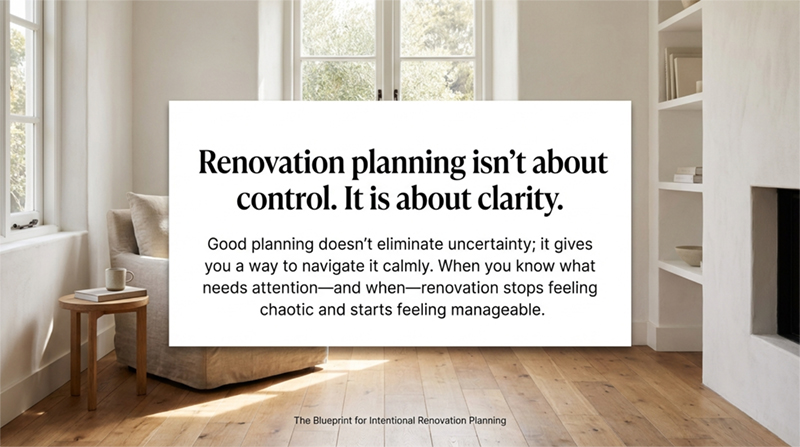
Good planning doesn’t eliminate uncertainty.
It gives you a way to navigate it calmly.
When you know what needs attention—and when—renovation stops feeling chaotic and starts feeling manageable.
A Quiet Next Step (If This Helped)
Over time, I noticed that homeowners didn’t need longer checklists—they needed better ones.
That insight eventually shaped How to Renovate Right—a home renovation guide built around decision clarity rather than overwhelm.
If this checklist helped you think more clearly about your renovation, there’s more structure available when you’re ready.
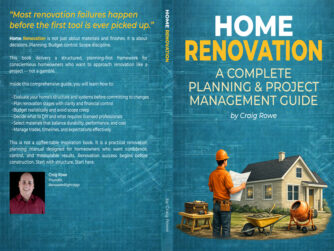
We share a number of frameworks and planning logic in our book, Home Renovation, your complete planning and home renovation project management guide focused on understanding the anatomy of your home before planning your home renovation.
If this article helped improve your renovation planning thoughts and processes then there are more renovation planning and budgeting topics, freely available on this site, or within our book or by signing up to the RenovateRight.app whenever you’re ready.
If this article helped reframe how you think about renovation checklist creation, there are more renovation planning topics for homeowners and first-time DIY renovators available here on our site when you’re ready.