


Most homeowners don’t struggle with renovation because they lack ideas.
They struggle because they don’t have a clear path from idea to completion.
This home renovation guide is designed to do one thing well:
help you understand how a renovation actually unfolds, so you can make better decisions at the right time—without overwhelm.
Whether you’re early in the planning stage or already committed, this guide explains the renovation journey in clear, practical stages.

Why Most Renovation Advice Feels Unhelpful
A lot of renovation content focuses on:
- Inspiration
- Products
- Trends
Very little explains the process.

As a result, homeowners often:
- Jump ahead too quickly
- Fixate on details before foundations are clear
- Feel confident one week and uncertain the next
A practical renovation guide doesn’t just tell you what to do—it explains when and why decisions matter.
The Renovation Journey (At a Glance)
Almost every home renovation—large or small—follows the same broad path:
- Idea & intent
- Planning & definition
- Pre-construction preparation
- Construction & delivery
- Completion & handover

Problems usually occur when these stages blur together.
Let’s walk through them clearly now in this home renovation guide.
Stage 1: From Idea to Intent
Every renovation starts with an idea.
But ideas are vague by nature.

Before anything else, the goal is to turn ideas into intent.
This means understanding:
- Why you’re renovating
- What problem are you solving?
- What must be different when it’s finished
This stage isn’t about layouts or finishes—it’s about direction.
When intent is unclear, later decisions feel harder than they should.
Stage 2: Planning and Definition (Where Outcomes Are Set)
This is the most important stage in home renovation planning.

Here, you define:
- The scope of work
- What decisions must be made early
- What can remain flexible
- Budget expectations and allowances
- Rough sequencing
Most renovation mistakes happen when this stage is rushed or skipped.
Good planning doesn’t lock in everything—it creates decision clarity.
Stage 3: Pre-Construction Preparation
This stage often looks quiet—but it matters.
It’s where planning turns into readiness.

Typical focus areas include:
- Finalising key decisions
- Aligning documentation with reality
- Confirming timelines and responsibilities
- Ensuring everyone understands the scope
When this stage is done well, construction flows.
When it’s not, problems appear quickly.
Stage 4: Construction (Where Planning Is Tested)
Construction is where people expect chaos—but well-planned projects often feel surprisingly calm.
At this stage, good planning shows up as:
- Fewer surprises
- Faster resolution when issues arise
- Clear communication
- Fewer costly changes

Problems during construction usually trace back to earlier stages—not the work itself.
Stage 5: Completion, Handover, and Living With the Result
Finishing a renovation isn’t just about the final inspection.
It’s also about:
- Understanding what was done
- Knowing what was installed
- Having records for the future
- Feeling confident living in the space

Many homeowners don’t realize how valuable this information becomes later—especially for maintenance, upgrades, or resale.
What Makes This a Practical Home Renovation Guide
A practical home renovation guide shouldn’t overwhelm you with detail.
It helps you:
- Focus on the right decisions at the right time
- Avoid common renovation mistakes
- Understand how one choice affects another
- Stay calm when uncertainty appears
Especially for first-time home renovation projects, this structure turns confusion into clarity.
Why Renovations Feel Easier With a Clear Framework
When you understand the journey:
- Decisions feel less intimidating
- Advice makes more sense
- You can spot risks earlier
- You regain a sense of control
Renovation stress isn’t caused by complexity—it’s caused by uncertainty without structure.

If You’re Early in the Process
If you’re still in the idea or planning stage, this is the best time to slow down.
Good home renovation planning upfront:
- Prevents costly mistakes later
- Reduces stress during construction
- Improves the final outcome
You don’t need perfect certainty—just a clear framework.
If You’re Already Underway
If your renovation has already started, this guide still applies.
Understanding the stages helps you:
- Diagnose where problems are coming from
- Re-anchor decisions
- Regain clarity when things feel reactive
It’s never too late to introduce structure.
This Is What Most Homeowners Are Missing
Most people don’t need more inspiration.
They need:
- Clear sequencing
- Practical guidance
- Reassurance that uncertainty is normal
That’s what turns renovation from something overwhelming into something manageable.
A Quiet Next Step (If You Want the Full Framework)
I hope this practical home renovation guide has helped clarify some things for you.
For some time now, we’ve helped homeowners organize renovation decisions into simple stages, checklists, and planning logic via our software, RenovateRight.app
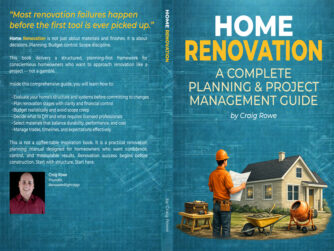
Turning all of those insights into a clear framework eventually became the Home Renovation book, your complete planning and home renovation project management guide focused on understanding the anatomy of your home before planning your home renovation.
If this guide helped you see the journey more clearly, we have more interesting renovation topics here on the site, offering more depth when you’re ready.