


Most people think renovation starts when work begins.
In reality, the most important part of a renovation happens before anything changes physically.

The Hidden Phase That Determines Everything
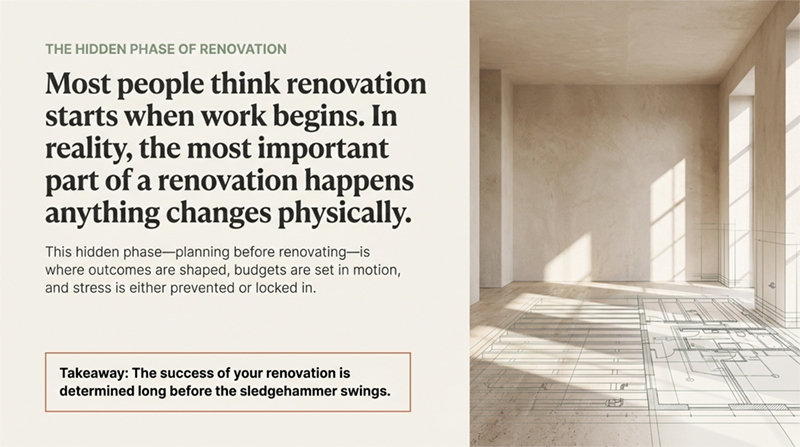
This hidden phase—planning before renovating—is where outcomes are shaped, budgets are set in motion, and stress is either prevented or locked in.
And yet, it’s the phase almost no one talks about clearly.
Why Planning Before Renovating Is Often Overlooked
Some may argue, planning before renovating doesn’t look productive and it can lead to paralysis by analysis.
Why? Because there’s no visible progress. No demolition. No deliveries.
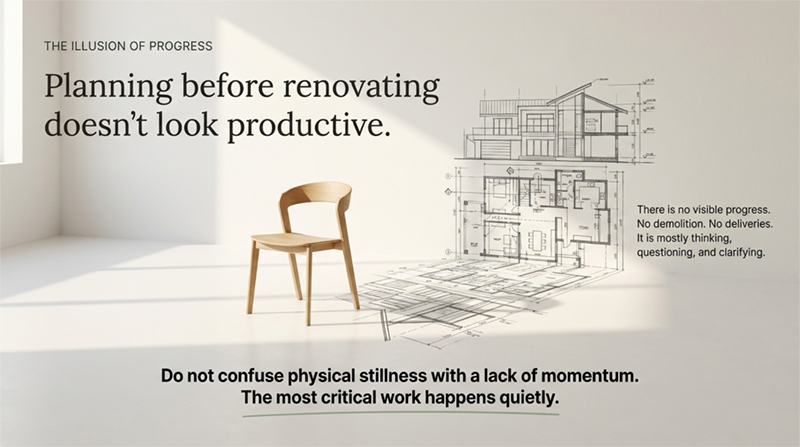
It’s mostly thinking, questioning, and clarifying.
Because of that, many homeowners rush through it—eager to “get started”—without realizing they’re skipping the part that determines how everything unfolds.
What This Hidden Phase Actually Is
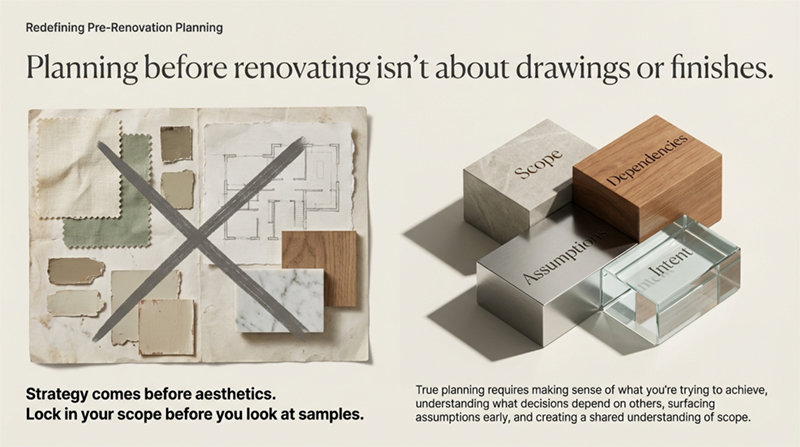
Planning before renovating isn’t about drawings or finishes.
It’s about:
- Making sense of what you’re trying to achieve
- Understanding what decisions depend on others
- Surfacing assumptions early
- Creating a shared understanding of scope
This phase exists whether you acknowledge it or not.
The only question is whether it happens intentionally or by default.
Why This Phase Determines Everything That Follows
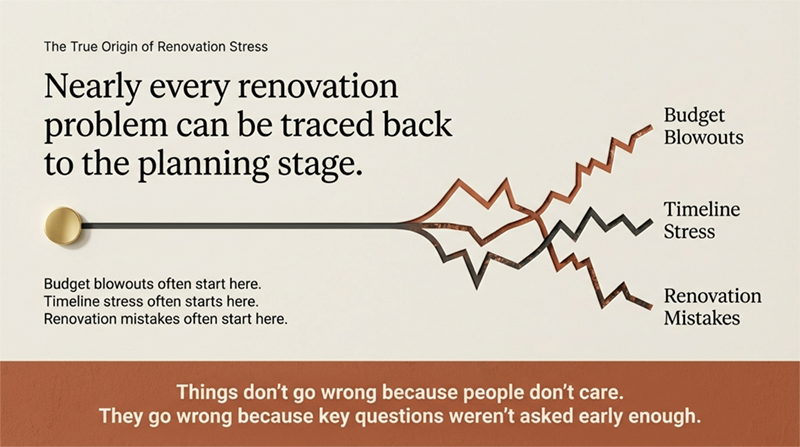
Budget blowouts often start here.
Timeline stress often starts here.
Renovation mistakes often start here.
Not because people didn’t care—but because key questions weren’t asked early enough.
Nearly every renovation problem can be traced back to this stage.
The Decisions That Belong in the “Before” Phase
Certain decisions are best made before work begins.
These include:
- Overall intent and priorities
- What absolutely must be included
- What can remain flexible
- What risks are acceptable
- Where budget pressure will be felt most
When these decisions are unclear, later choices feel rushed and reactive.
Why First-Time Renovators Struggle Most Here
First-time home renovation projects are especially vulnerable in this phase.
Why?
- There’s no reference point
- Everything feels equally urgent
- It’s hard to tell what can wait
So decisions get made in the wrong order—not out of carelessness, but out of uncertainty.
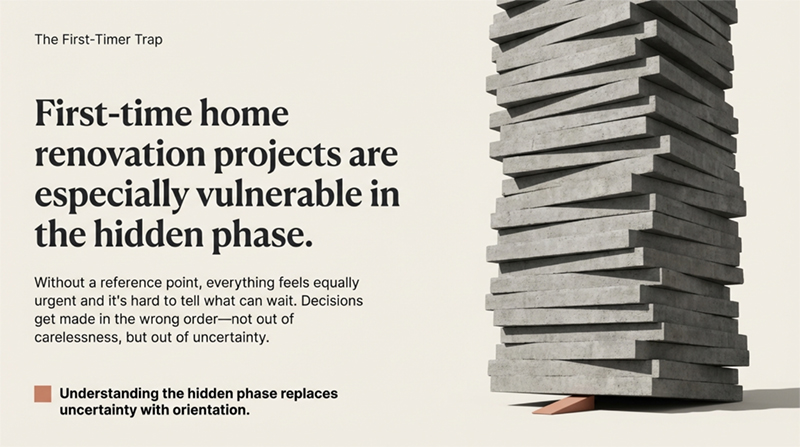
Understanding this phase gives first-time renovators something they rarely get: orientation.
The Cost of Skipping the Hidden Home Renovation Phase
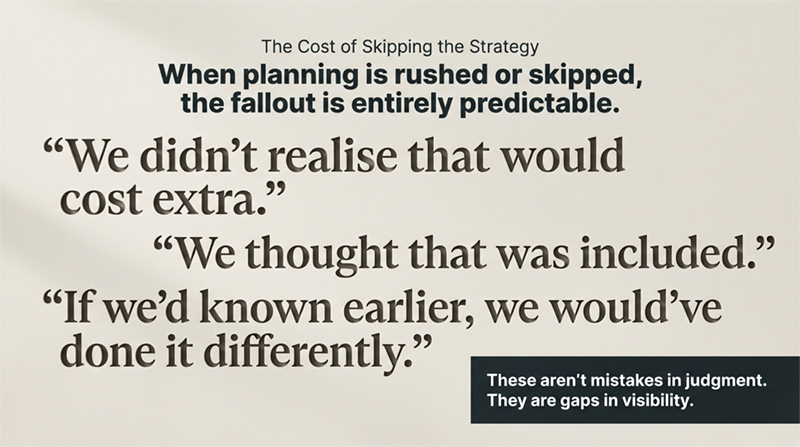
When planning before renovating is rushed or skipped, problems tend to show up as:
- “We didn’t realise that would cost extra.”
- “We thought that was included.”
- “If we’d known earlier, we would’ve done it differently.”
These aren’t mistakes in judgment—they’re gaps in visibility.
What Good Pre-Renovation Planning Looks Like
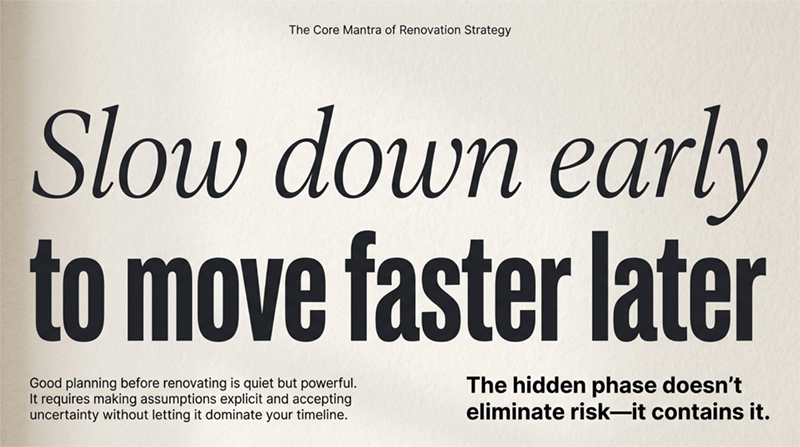
Good planning before renovating is quiet but powerful.
It involves:
- Slowing down early to move faster later
- Clarifying decision order
- Making assumptions explicit
- Accepting uncertainty without letting it dominate
This phase doesn’t eliminate risk—it contains it.
A Simple Way to Approach This Phase
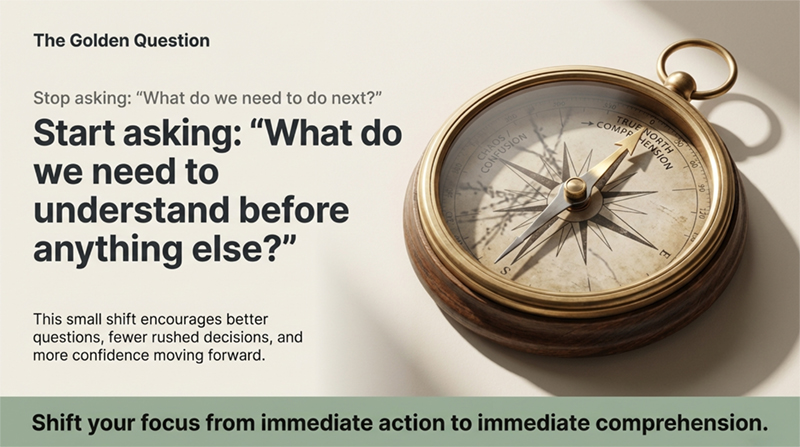
Instead of asking:
“What do we need to do next?”
Ask: “What do we need to understand before anything else?”
This small shift changes everything.
It encourages:
- Better questions
- Fewer rushed decisions
- More confidence moving forward
Why This Phase Feels So Hard — But Matters So Much
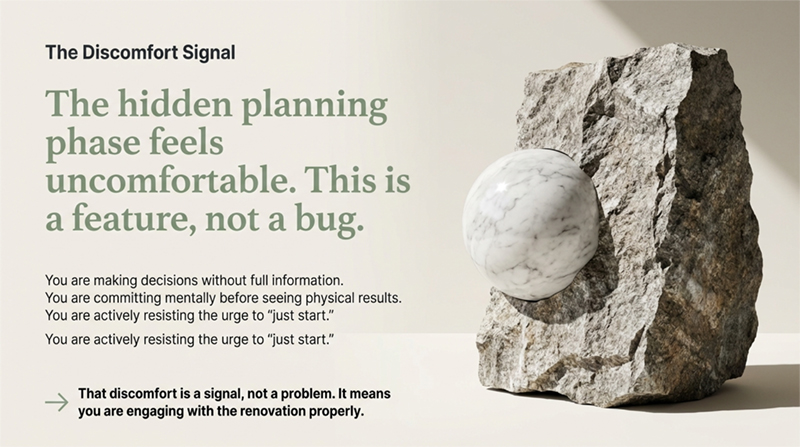
The hidden planning phase feels uncomfortable because:
- You’re making decisions without full information
- You’re committing mentally before seeing results
- You’re resisting the urge to “just start.”
But that discomfort is a signal—not a problem.
It means you’re engaging with the renovation properly.
Renovations That Feel Calm Almost Always Start Here
When people describe a renovation as “surprisingly smooth,” this phase is usually the reason.
Not because nothing went wrong—but because:
- Decisions were better timed
- Trade-offs were understood
- Surprises were absorbed, not amplified
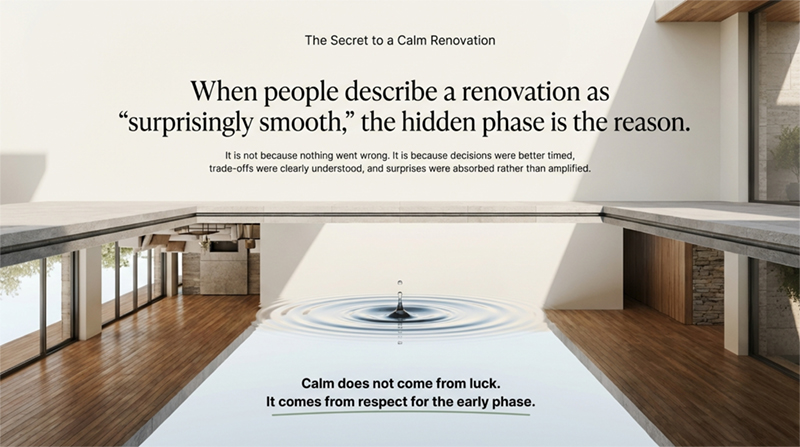
That calm doesn’t come from luck. It comes from respect for this early phase.
If You’re About to Start Renovating
If work hasn’t begun yet, you’re in the most powerful position you’ll ever be in.
This is the moment to:
- Pause
- Clarify
- Ask better questions
Time spent here is rarely wasted—and often repaid many times over.

If You’ve Already Started
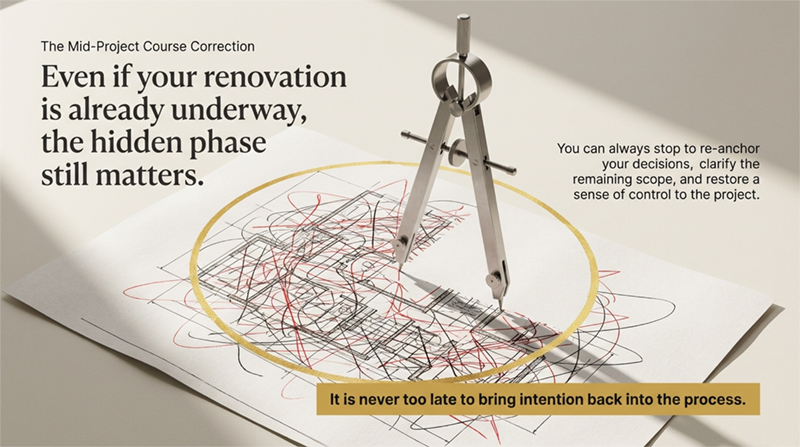
Even if your renovation is underway, this phase still matters.
You can:
- Re-anchor decisions
- Clarify scope
- Restore a sense of control
It’s never too late to bring intention into the process.
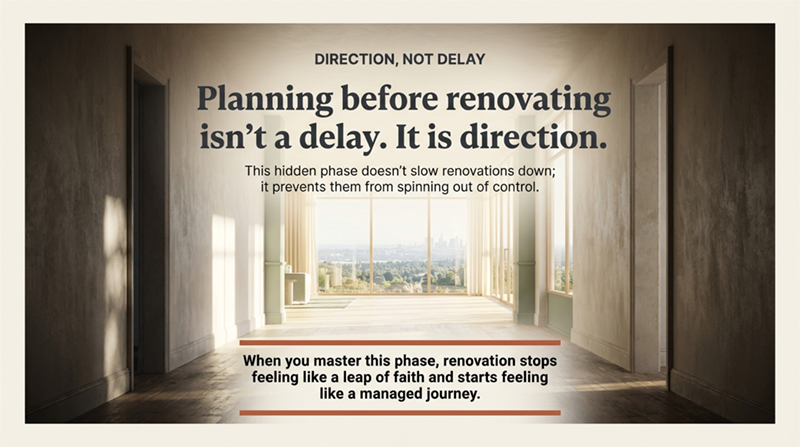
Planning Before Renovating Isn’t Delay — It’s Direction
This hidden phase doesn’t slow renovations down.
It prevents them from spinning out of control.
When you understand this phase, renovation stops feeling like a leap of faith—and starts feeling like a managed journey.
A Quiet Next Step (If This Changed How You See Planning)
Over time, we realized homeowners didn’t struggle because renovations were complex—they struggled because no one explained this “invisible phase”, early.
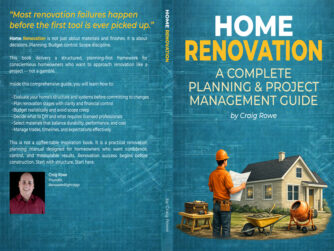
Turning that insight into a clear framework eventually became the Home Renovation book, your complete planning and home renovation project management guide focused on understanding the anatomy of your home before planning your home renovation.
If this article helped you see planning differently, there’s more structure available on this site, in our book or by signing up to the RenovateRight.app when you’re ready.