


Costly renovation mistakes don’t usually come from bad decisions.

They come from reasonable decisions made without the full picture.
Most homeowners who run into budget blowouts, delays, or stress genuinely believe they planned carefully. And in many cases, they did—just not in the way renovations actually demand.
This article explains the most costly renovation mistakes and how to avoid them, why they’re so common, and how to avoid them without becoming a building expert.
Why Costly Renovation Mistakes Are So Easy to Make
Renovations are unusual projects.
You’re often:
- Making high-stakes decisions for the first time
- Coordinating multiple trades with different priorities
- Working with incomplete information
- Under time and budget pressure
Unlike other purchases, there’s rarely a clear moment where someone says, “Here’s how all of this fits together.”
That’s why renovation mistakes are rarely obvious at the start—they compound quietly.

The Most Costly Renovation Mistakes (And What’s Really Behind Them)
1. Starting With Quotes Instead of Clarity
Getting quotes feels productive.
But quotes don’t create clarity—they reflect it.
When homeowners seek pricing before decisions are properly defined, quotes often:
- Exclude important items
- Make assumptions that aren’t shared
- Vary wildly with no clear comparison
This mistake leads to budgets that look fine early—and fall apart later.
The real issue:
The scope wasn’t clear enough to be priced accurately.

2. Underestimating the Cost of “Small Changes”
A minor layout tweak.
A finish upgrade.
A last-minute idea.
Individually, these feel harmless.
But renovations are interconnected. A “small” change can affect:
- Electrical layouts
- Plumbing runs
- Cabinet sizing
- Tiling quantities
- Labour sequencing
Costs rise not because of the change itself but because of what it triggers downstream.
The real issue:
Decisions were made without visibility of their ripple effects.
3. Assuming the Budget Covers “Everything”

One of the most common costly renovation budget mistakes is assuming the quoted number is the final number.
Often missing:
- Design development costs
- Engineering or compliance items
- Temporary works
- Variations created by unknowns
- Contingency for existing-home surprises
The result isn’t overspending—it’s under-planning.
The real issue:
Invisible costs weren’t surfaced early.
4. Planning the Timeline as a Best-Case Scenario
Many homeowners plan timelines the way they hope things will go.
But renovations don’t run on optimism—they run on dependencies.
Delays often come from:
- Decisions not finalised on time
- Materials arriving late
- Trades waiting on previous work
- Inspection or approval bottlenecks
A single delay can stall everything behind it.

The real issue:
The sequence of work wasn’t understood or respected.
5. Thinking Stress Is Just “Part of Renovating”
This might be the most damaging mistake of all.
Many people accept stress as unavoidable—so they ignore early warning signs:
- Confusion
- Decision fatigue
- Constant second-guessing
- Communication breakdowns

Stress isn’t a personality issue. It’s usually a structure issue.
The real issue:
Too many decisions were being made reactively instead of deliberately.
Why These Renovation Mistakes Keep Repeating
What’s striking is how predictable these mistakes are.

They happen because:
- Renovation advice is fragmented
- People focus on tasks instead of decision flow
- Most content explains what to do, not when or why
Especially for first-time home renovation projects, there’s no reference point for what “good planning” actually looks like.
So people fill the gaps with assumptions—and assumptions are expensive.
A Simple Way to Avoid Most Renovation Mistakes
You don’t need perfect information.
You need better timing of decisions.

Here’s a practical shift that helps:
- Make assumptions visible
- Lock decisions before they affect multiple trades
When you do this, mistakes don’t disappear—but they stop compounding.
If You’ve Already Made Some of These Mistakes
This is important:
Making renovation mistakes doesn’t mean you’ve failed.
Almost every homeowner encounters at least a few—even experienced ones.
What matters is catching them early, before they:
- Multiply
- Lock in costs
- Create ongoing stress
Most mistakes are fixable with structure and visibility.
Why Good Planning Feels Calm (Even When Renovations Aren’t)

Well-planned renovations still have surprises.
The difference is:
- Surprises are absorbed, not amplified
- Decisions feel intentional, not rushed
- Homeowners stay in control
That calm doesn’t come from luck—it comes from understanding how renovations actually unfold.
A Quiet Next Step (If This Sounds Familiar)
Over time, I noticed that the same renovation mistakes kept repeating—not because homeowners didn’t care, but because no one gave them a clear planning framework.
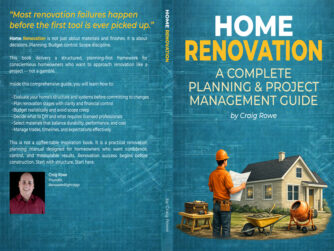
Breaking those patterns into simple, practical guidance forms the core approach of our book, Home Renovation, your complete planning and home renovation project management guide focused on understanding the anatomy of your home before planning your home renovation.
If this article helped you see planning differently, there’s more structure freely available on this site, or when you buy our book or by signing up to the RenovateRight.app whenever you’re ready. and renovateright.app as a software solution.
If this article helped you recognize risks early, there’s always more on offer when you’re ready.